
Data reveals Fife is one of Scotland’s fastest growing regions as these towns expand

Fife is one of Scotland’s fastest-growing regions for the number of expanding communities redesignated as towns.
Three communities - Guardbridge, Blairhall and Springfield - have been reclassified upwards after their populations grew to more than 1000 people.
Only Aberdeenshire has a greater number of newly-designated towns, increasing by five in the past 11 years - with Fife’s growth attributed in part to improved commuter links.
The growth has been highlighted through research compiled to create the latest version of Understanding Scottish Places (USP), a unique hub sharing insight into the dynamics of Scotland's towns.
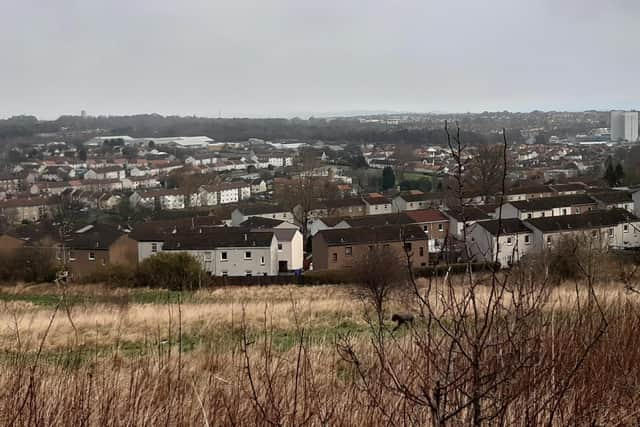

Kirkcaldy -Scotland’s sixth-largest town with a population of around 51,000 - has recorded a rise of 3% since USP 2014. The number of households there is up by 5%.
Not only does USP provide an overview of the likes of population, house prices, employment, commercial profile and public services, but allows every town to easily compare itself with other similar places.
Community organisations, businesses and local authorities are being urged to tap into the platform to help shape their work.
Fife is quickly emerging as one of Scotland’s fastest-growing regions, with a significant number of communities recently granted town status - among the highest in the country.
Scotland’s Towns Partnership (STP) has worked alongside the University of Stirling - with support from the Scottish Government - to add tens of thousands of pieces of new data to www.usp.scot.
Kimberley Guthrie, STP’s Chief Officer, said: “The comparison tool is one of the most exciting elements of USP, allowing towns to immediately compare themselves with similar places. That means these places can learn from each other - potentially demonstrating the art of the possible when it comes to regeneration.
“USP supports organisations of all kinds to understand how places across Scotland are similar, emphasising shared characteristics and opportunities to build knowledge on their local context.
“The data often highlights unseen or unrecognised challenges and opportunities which can inform planning, management and policy decisions.”
The data for USP has the most recent census results as its foundation, but pulls in facts from a variety of other sources to broaden the analysis available.
Anne Findlay, a Research Fellow at the University of Stirling, led analysis of the data.
She said: “The statistics show that towns are developing in new and interesting ways, but USP also helps people understand how towns relate to each other. That’s important.”
To view all of the data, go to www.usp.scot