
Safety first at Fife attraction
New information panels have been installed at a popular Fife attraction in a bid to help improve the safety of coastal walkers.
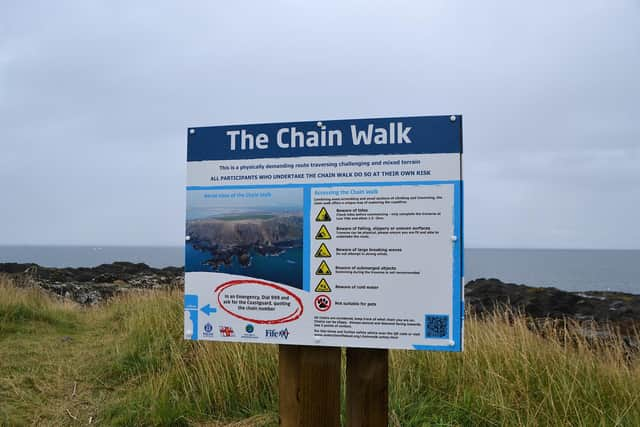
In a joint effort by the RNLI Water Safety Team and Fife Coast and Countryside Trust (FCCT), with the support of Police Scotland and Fife Council, the panels have been put up at Elie Chain Walk.

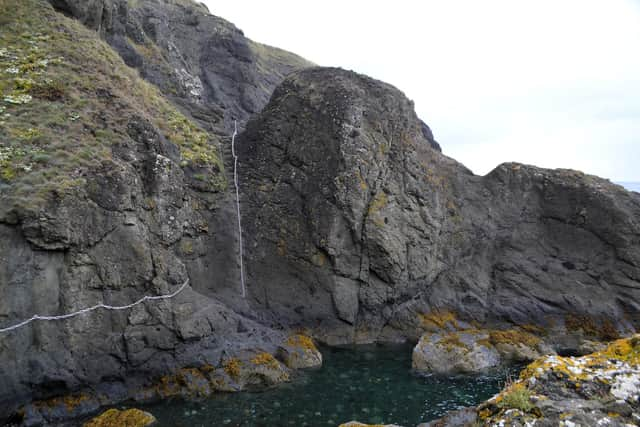
Created over a century ago, it is a scramble route that uses eight chains that are permanently attached to the base of the sea cliffs. RNLI Anstruther respond to multiple incidents at the location each year.
The newly installed signage was eight years in the making, from idea to installation. Two sets of panels are situated at either end of the access to the Chain Walk where it deviates from the main coastal path.
On each panel there is information about the surroundings, the Chain Walk, tide times, terrain and the height you need to be to use the chains. A walker will get this information whilst on the main path and will be able to decide whether to continue on that path or to take the alternative route.
The first stage of this Coastal Path Safety Project began in 2018 when it was recognised that marking the coastline would be beneficial for the RNLI and Emergency Services to improve response times and ultimately the safety of Fife Coastal Path users.
Safety marker posts were installed around the coast, and this now covers the entire coastline from Leven to St Andrews. Each of the posts are numbered with a code and What3Words location, and anybody who has an incident or witnesses one can reference these posts when they are calling 999 to the Coastguard.
On several occasions, the RNLI have had shouts where these points have been used to reference the position of the casualty, allowing quick location and extraction. Quick identification of the location of a casualty is important to ensure appropriate treatment can be given in as little time as possible.
Speedy transfer to hospital also improves outcomes and, in some circumstances, can save lives.
The posts are not just used for emergencies; they are useful reference points for people who spot wildlife, university students undertaking studies and for the FCCT to identify areas that need maintenance.
With the latest stage of the project complete, there are around 100 installations along this stretch of the Fife Coastal Path including safety marker posts, information boards and safety panels.
David Corstorphine, RNLI Water Safety Officer, said: “It is fantastic to finally have these panels installed at the Elie Chain Walk. RNLI Anstruther are often called to the area to help people who have got into difficulty, been caught by the tide or have injured themselves.
“The RNLI Water Safety Team are not advertising the use of the Chain Walk but we acknowledge that people will use it, and we want them to understand the risks.
“These panels have all the necessary information about the Chain Walk and will allow walkers to make an informed decision on whether to take that route or use the main path.
“The Coastal Path Safety Project has been a real community effort, with each installation sponsored by an individual, group or local business.”
He added: “We are very grateful to the local community, including St Andrews University, Levenmouth Reconnected Project and Waid Academy pupils, for their input and support in making this project possible.”