
Fife pharmacies sign up in new campaign to prevent drug-related deaths

A new campaign is helping to prevent drug-related deaths in the Kingdom.
It has been launched by NHS Fife, and the harm reduction charity WithYou.
Figures published last year by the National Records of Scotland (NRS) showed that the numbers of drug misuse deaths in Scotland increased in 2023 by 12% from the previous 12-month period, with opioids like heroin and morphine the most common drugs connected to deaths. The figures also showed that people in Scotland were more likely to die as a result of illicit drug use than anywhere else in Europe, and more than twice as likely as those elsewhere in the UK.
One of the key strategies used to help reduce the harms associated with illicit substances involves the distribution of naloxone kits to known users of opioids. It works by interrupting opioid receptors in the body and in turn reverses the effects of an overdose involving powerful opioids.
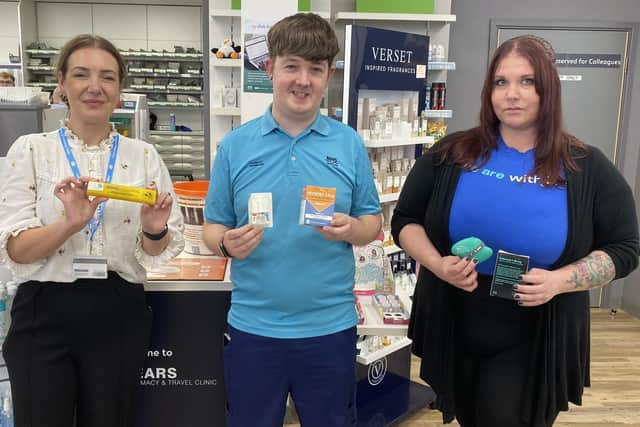

In October 2023 a national service was launched by the Scottish Government and Community Pharmacy Scotland to enable community pharmacies to provide emergency access to supplies of naloxone and all 86 across Fife registered.
A recent expansion saw the development of a Take Home Naloxone service, where pharmacies can provide overdose awareness training and naloxone kits to people at risk of overdose, and their friends and family members.
This saw representatives from NHS Fife’s pharmacy service working alongside WithYou, to provide face-to-face training for staff. Over 60 pharmacies signed up, with over 300 staff across Fife having already had training.
The development of the service saw 230 naloxone kits distributed by community pharmacies between April-December 2024, compared to 54 across the whole of the previous financial year.
Jamie Anderson,a senior pharmacy technician for Substance Use with NHS Fife’s addiction services, is leading the roll out of the training programme. He said: “The high numbers of people experiencing drug-related harms in Scotland is well-documented, and the issue affects us here in Fife just as it does elsewhere in the country. Naloxone is highly effective in helping reverse the effects of an opioid overdose. Community pharmacy has a really important role to play in supporting the distribution of emergency naloxone kits, and helping to reduce the numbers of drug-related harms we are seeing in Fife.
“Since the launch of the service last year we have seen numerous examples of where lives have been saved directly through the distribution of these kits from community pharmacies. With the number of participating pharmacies still increasing, we want to go further still to reduce the harms caused by opioid overdoses.”
WithYou has played an important role in providing overdose awareness sessions, naloxone supply and hands-on naloxone training. This training has extended into community pharmacy, equipping staff with the skills to respond appropriately and intervene effectively.
Danielle Wong, the charity’s Naloxone co-ordinator in Fife, said: "Our goal is to reduce the stigma surrounding overdose. Those who use opioids, both illicit and prescribed, often come into contact with their local pharmacies, so it is important that pharmacies stock naloxone and staff are confident having conversations around overdose risk.
"We are training pharmacy staff so they can recognise the signs and symptoms of overdose, and understand how to use naloxone. We want pharmacy staff to feel confident passing this information on to those at potential risk of an overdose - as well as their friends and family, and community members who are willing to step in to help save lives in Fife.”
Dears Pharmacy was one of the early adopters of the programme, with 16 branches across the region already participating.
Rebekah Drysdale, pharmacy manager in St Andrews, said: “From the outset, we have been really keen to get involved in the training programme. We had training last year and have since had a refresher more recently. Our staff feel better able to identify who would benefit from the naloxone kits, and how they should be administered if they are needed in an emergency. Staff also feel empowered to be able intervene appropriate and potentially save lives in the process.”