
Fife rivers suffer after dry summer
Recent rainfall has not been enough to reverse the impact of months of dry conditions in parts of Fife.
North Fife and Fife (East Neuk) have returned to ‘Significant Water Scarcity’ for the second time this year.
The latest weekly Water Scarcity Report from the Scottish Environment Protection Agency (SEPA) shows conditions are continuing to vary considerably across Scotland.
Very low river flows continue across parts of eastern Scotland, where a rainfall deficit built up over the spring and summer has proved harder to reverse.
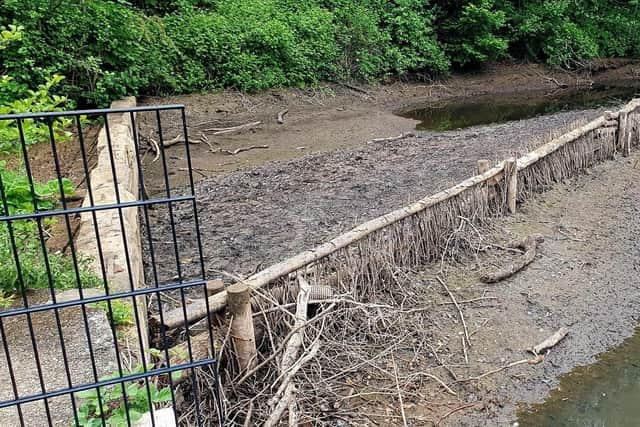

Parts of Fife have received below-average rainfall since March and significant further rainfall will be needed for widespread recovery.
Rainfall can raise river levels relatively quickly, but this does not necessarily reverse the effects of months of dry weather. Where river flows, soils and groundwater have been depleted over a longer period, sustained rainfall is needed for conditions to recover.
North Fife and Fife (East Neuk) first reached Significant Scarcity on 28 July. Temporary abstraction restrictions introduced at the time affected 99 licences, primarily supporting agricultural activities.
Rainfall allowed both areas to move out of Significant Scarcity in early August, although the wider area remained affected by water scarcity. Very low river flows subsequently returned and have now persisted long enough for North Fife and Fife (East Neuk) to reach Significant Scarcity again.
Eilidh Johnston, SEPA Senior Leader in Compliance, said: “It might feel as though Scotland has had plenty of rain in recent weeks. We have seen heavy rainfall and flooding in some places, while other areas have not recovered from water scarcity. But a wet few days do not undo the effects of a dry few months.
“In parts of the east, a rainfall deficit has built up over the spring and summer. Fife demonstrates that particularly clearly. North Fife and East Neuk improved enough to move out of Significant Scarcity in August, but they have now reached that level for a second time.
“It is important to remember why we monitor river levels and ecological conditions so closely, and why we may reduce or temporarily stop abstractions when conditions become severe. When rivers remain exceptionally low for a prolonged period, there is a greater risk of serious and long-lasting damage to the water environment and the plants and animals that depend on it.
“Our role is to protect the health of our rivers while recognising that farms and other businesses also depend on water from the environment. The east of Scotland is an important growing region and the position is different from late July, with the main period of irrigation demand now past for many growers while others still have crops which require water.
“We have been speaking directly to businesses whose abstractions will be affected so they understand what this means for them, and we will continue to keep that dialogue open.
“This summer also shows why building Scotland’s resilience to water scarcity matters. We need to be prepared for both too much and too little water, and for conditions to be very different from one part of the country to another. As our climate changes, Scotland is expected to experience hotter, drier summers alongside more intense rainfall.”
She added: “Protecting the water environment, using water efficiently and planning ahead for periods when less water is available will become increasingly important.”