
Tracking the day the last nightclub closes – if that happens we lose something precious

One statistic stopped me in my tracks this week.
Nightclubs are closing their doors across the UK at such a rate that, if the current trajectory continues, then the last venue will shut in 2029.
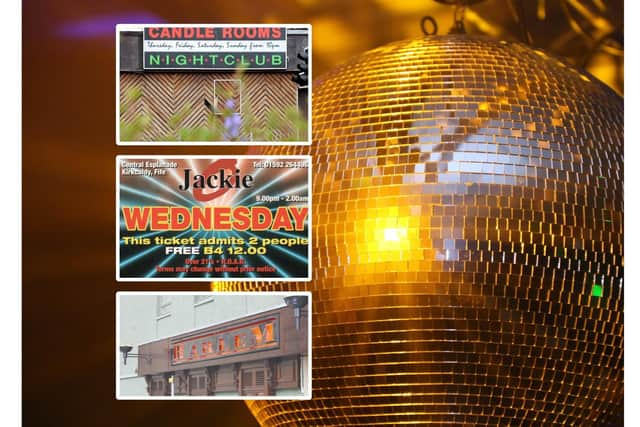
For generations who grew up in the golden days of Jackie O, Bentleys, Kitty’s, Follies and all the clubs that packed them in across the 70s, 80s, 90s and into the new Millennium, it seems unthinkable, and yet, in many ways, Fife is already here.
All of the names above have long gone. Daytime clubbing is still finding a willing market - it’s lasted longer then the fad I thought it was - and The Venue, better known as Society, is still hanging in there, but the vibrancy which made the town centre an often livelier place at 2:00am than it ever was at, say, 6:30pm, has withered.

Running a club, pub or restaurant in 2025 is tougher than ever, and margins are eye-wateringly tight. Everything from overheads to staff costs are up, and we, as a society, seem to have become all too lackadaisical about going out on a regular basis.
I’ve been around here long enough to recall great nights in Smithy’s Tavern before everyone piled along to Kitty’s and then on to one of the take-aways in Whytescauseway where you met lots of folk you knew all ordering their food. There were probably more folk rammed into one pizza joint than there are on the High Street sometimes these days …
I don’t see or feel that buzz when I’m down town. Pubs may be busy but they aren’t as packed as they were pre-lockdown, and there are times you walk past a restaurant and do a double take at the empty tables at peak time on a Saturday.
Nightclubs were the glue which sealed the evening economy. They extended our time out into the wee sma’ hours, were places we met and socialised, and drove that vital footfall to take-aways, filled taxis, and gave employment to everyone from DJs to glass collectors.
If there is anything worse than a closed club it is surely one with barely a handful of patrons. These venues need a critical mass to generate the buzz necessary for a great night - but where does that come from with a generation that seems less inclined to venture out than any I have ever known?
There used to be a bar down at Holyrood in Edinburgh which was a cool place at night, and yet, by day, it felt weird standing at the beer with a pint.
All around you were groups of mums and babies, a knitting group or a book club, all engaged over a coffee and food sharing their own interests. It offered water top-ups for folk heading off to climb Arthur’s Seat, so walking gear was draped over many chairs - in short, it catered for as many different groups as possible, rather than just being another bar with a decent view.
Clubs cannot survive on a few hours trade a couple of nights a week, but turning them into daytime venues or community hubs isn’t easy - they are big, and, when the lights are off, pretty soul-less places with no real facilities to sit, read, meet, talk as a group. That isn’t their market but maybe, it needs to be as well?
If clubland is edging close to its last dance, then it has to somehow reinvent the wheel once more, and quickly. The current trajectory gives the industry four years, and, as always, we won’t know what we had until it is gone.