
Fife community launches campaign to take over historic church and create new venue

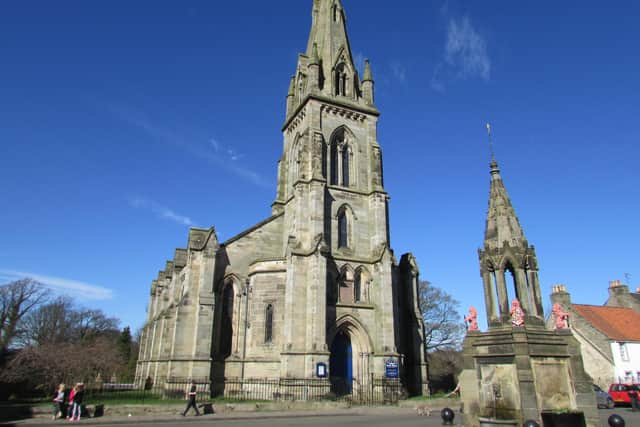
A Fife community has launched a campaign to secure a historic church which is facing closure as a place of worship and is expected to be sold.
Falkland Church has stood at the heart of the royal burgh for 175 years of history, and the Church of Scotland has confirmed plans to dispose of the building by the end of December 2027. Now a steering group has been set up to explore how the community could buy it ad transform it into a venue for events, exhibitions, and local activities.
To measure local interest, Future of Falkland Church Building (FFCB), has set up two local events and also issued a questionnaire with the Falkland Newsletter which is available from Falkland Convenience Store and the Deli on the High Street.
Plans to create a new future for the church will only move forward if there is strong community support and a viable business plan – but the church’s renowned acoustics and organ make it especially well-suited to musical performances, and local groups would be encouraged to use the space for their own activities.

As part of the campaign, there is a drop-in event on Wednesday, October 22, from 2:00 to 7:00pm when all are welcome to visit the church, discuss plans for the future, and share ideas for its use. Members of FFCB and Fife Voluntary Action will be on hand to answer questions. There is also a fundraising concert on Friday, December 13 at Falkland Community Hall featuring popular Scottish folk band North Sea Oil, which marks the start of fundraising efforts.
Keith Rennie, founder and director at Saltire Rare Malt, which is based in Falkland, said: “Saving Falkland Church is not just about protecting bricks and mortar - it’s about preserving the heart of our community.
“For 175 years, this building has been a place where people have come together in moments of joy, sorrow, and celebration. If we lose it, we lose a vital link to our history and identity. By securing its future, we can create a living space that honours its past while giving future generations a place to gather, learn, and be inspired.
“When we learned last year that the Church of Scotland planned to close 50 churches in Fife, we felt we had to act. A steering group was formed to ensure this magnificent building could remain in community ownership and open for everyone’s use.”
Steering group member, John Smith, added: “Our vision is to rethink the space so local groups can benefit, visitors can discover our heritage, and the church’s exceptional acoustics and organ can host concerts and events. At the same time, we would continue its spiritual role, with weddings, christenings, Christmas celebrations and farewells. In short, we want Falkland Church to remain a living, breathing part of the community, with its doors open to all.”
A note of interest has already been submitted to the Church of Scotland, and the steering group has appointed interim office bearers to establish a formally constituted organisation.
If successful, the project would see the church repurposed as a multi-use community space, hosting concerts, exhibitions, and local events, while continuing to offer spiritual services such as weddings, christenings, and Christmas celebrations. Plans also include opening the doors to visitors, enabling them to admire the historic building and learn more about Falkland’s heritage through dedicated displays.
A spokesperson for the Church of Scotland said: “We can confirm that the Presbytery Mission Plan for Fife states that the Falkland Church building is to be disposed of by December 2027. Whilst the building is scheduled for release, the sale process has not yet commenced.
“Once all necessary approvals are in place and the property is brought to market, the General Trustees, the Church’s property holding arm, would welcome an offer from any interested local group. As a charity, the General Trustees and local Kirk Sessions, are under a legal obligation to get the best value for any asset sold, which is primarily a fiduciary obligation.
“The Church owns thousands of properties, far more than required to achieve our primary mission of sharing the Good News of Jesus Christ.
“Congregations benefit from the proceeds of property sales and the money is invested in other local buildings retained by the Church, from which the wider community may benefit.”