
Landmark project introduces 30,000 oysters into Forth after 100-year absence

A restoration project off the Fife coast has been shortlisted for the Nature of Scotland Awards as it celebrating its first three years.
Restoration Forth marked the milestone by announcing some major successes and thanking the volunteers and organisations who have made it possible.
Restoration Forth aims to restore four hectares of seagrass meadows and European flat oyster beds in the Firth of Forth. Last spring as part of a trial, volunteers planted 25,000 eelgrass seeds at Pettycur Bay Kinghorn, as well as East Lothian’s Belhaven Bay, and Dalmeny’s Drum Sands,
Since then, a further 150,000 common eelgrass seeds have now been added thanks to the work of volunteers trained by a team of experts in seagrass planting techniques, so that local residents can support seagrass beds to thrive in the future.
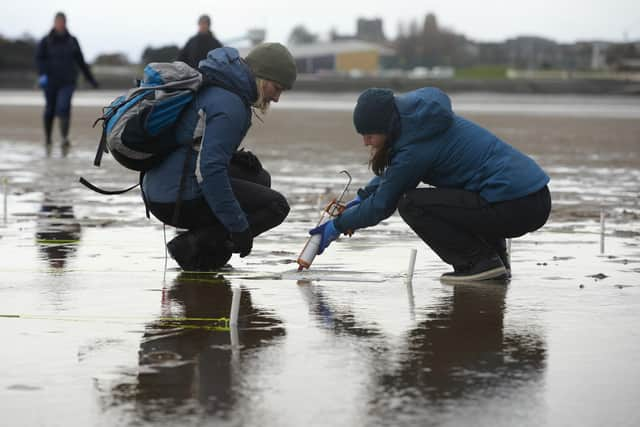

In total it has re-introduced 30,638 European flat oysters to the Firth of Forth after an absence of 100 years, and monitoring has shown that 85% of those surveyed are surviving so far.
The Forth’s oyster beds were some of the most famous in Scotland over the 17th and 18th centuries. Oysters were significant for the economy and diet in the local Newhaven and Leith areas. The ‘Newhaven Fishwives’ would sell them around Edinburgh and were a prominent part of the community.
Some records show that nearly 30 million oysters were fished from the Firth of Forth annually, over a 10 year period. Unfortunately, overfishing and industrial development led to their local extinction.
Anna Inman, shellfish engagement officer at the Marine Conservation Society, said: "We truly appreciate all the hard work that has gone into bringing oysters back to the Firth of Forth and are delighted to have reached our milestone of 30,000 oysters restored. Oysters are not only important ecosystem engineers, but also have huge cultural significance to communities around the Forth. It is our collective responsibility to restore and protect our seas, and Restoration Forth is a hugely positive step towards this."
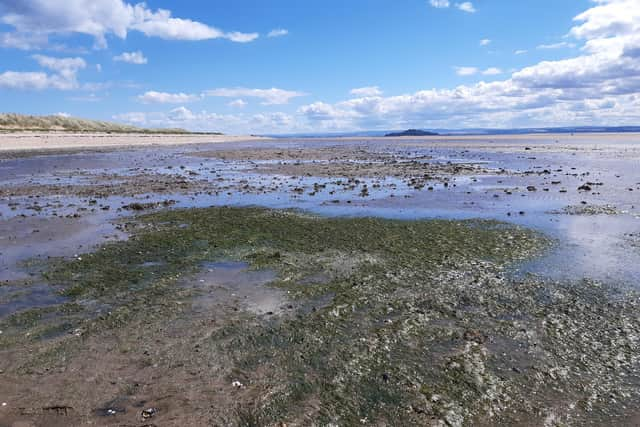
As a result of the project, we now understand a lot more about the benefits of oysters within an ecosystem. Where there are oyster reefs, you can also find juvenile fish, crabs, sea snails and sponges.
Reintroducing European flat oysters to the Firth of Forth creates a sanctuary for a vast array of marine life- and research by Heriot Watt University suggests that by restoring healthy oyster beds, biodiversity could potentially double over a 10-year period. Seagrass meadows also increase biodiversity, help tackle climate change and improve water quality. Restoration Forth aims is to restore up to 4 hectares in the Firth of Forth.
Volunteer Melanie McAinsh said: “I’ve swam in the Forth all my life. For me it’s a great ‘hope’ project, the hope that in my lifetime we can give something back. I found the history of oysters in the Firth of Forth fascinating, especially that the water used to be clear. The whole project has made me feel quite emotional – from cleaning the oysters to throwing them in to the water from a boat - it’s a journey. It’s great to see that a few people can make a huge difference.”