
Milestone as NHS Fife completes 1000th robotic assisted procedure in pioneering programme

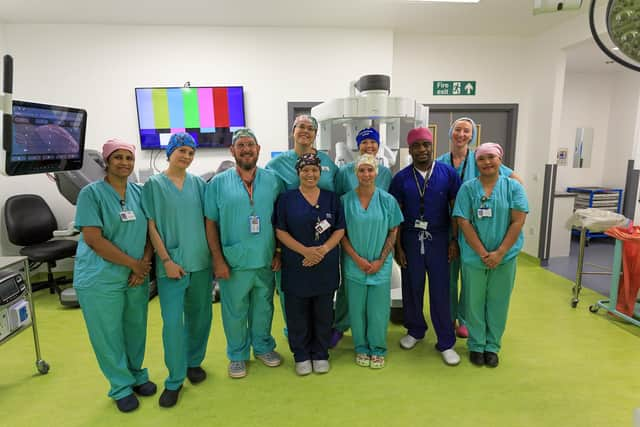
NHS Fife has completed 1000 robotic-assisted surgical procedures, helping improve outcomes for patients and reinforcing the board’s position as a pioneer in surgical innovation.
The landmark procedure was carried out at the Victoria Hospital in Kirkcaldy, where robotic-assisted surgery (RAS) was first introduced in 2021.
Since then, the service has expanded and now includes colorectal, gynaecological, and urological specialties, with eight consultant surgeons now trained in the use of the Da Vinci robotic system.
Robotic surgery is mainly employed for use in major cancer operations. It offers a range of advantages for patients over traditional open or laparoscopic - or keyhole - techniques. Smaller incisions, reduced blood loss, lower risk of infections, and the greater precision offered by the robotic system reduces the surgical stress response on the patient, particularly in more complex procedures.

It also lowers the risk of complications, which is a huge advantage for patients undergoing major surgery. In addition, patients experience less post-operative pain enabling faster recovery times, thereby allowing people to return to normal activities much quicker.
The development of the robotic programme in Fife has allowed prostatectomy procedures to be carried out locally for patients with prostate cancer. Patients previously had to travel to NHS Lothian for such operations.
Mr Satheesh Yalamarthi, consultant surgeon and clinical director who oversees the programme, said: "Reaching 1000 procedures is a really significant achievement for us. The development of the robotic programme has been transformative, providing benefits for patients across Fife. The precision and control offered by the Da Vinci system allows us to operate more safely, helping patients recover faster and with fewer complications."
The use of the system means patients undergoing robotic procedures can usually be safely discharged more quickly than those undergoing more traditional surgery, often within 48 hours of the procedure.
This allows them to get back home sooner, and robotic surgery also allows hospital resources to be used more effectively, with patients less likely to be readmitted due to a significant drop in the complications and fewer requiring care in a High Dependency Unit post-surgery.
Since implementation, the team behind the surgery has kept utilisation of the robot high, helping maximise the numbers of procedures carried out and enabling the service to become steadily more efficient in using this surgical technique.
Claire Dobson, director of acute services, said: "Our theatre teams worked really diligently to embed robotic-assisted surgery into routine practice here in Fife.
“Since the launch of the programme in 2021, the use of robotic surgery has expanded to include a range of different specialities, with the number of surgical staff trained in the use of robotic system also steadily increasing over time. This innovation not only helps us increase efficiency - it also improves patient outcomes and allows patients to recover more quickly with less pain and a reduced chance of post-operative complications.”
Professor Christopher McKenna, medical director, added: "The development of robotic-assisted surgery is one of a number of areas where are embracing new treatments and technologies to help us improve the care we can offer to patients.” He added: “Fife has some of the innovative and forward-thinking clinical teams in the country, who in recent years have been at the forefront of developing truly pioneering surgical interventions in urology, gynaecology and orthopaedics, both at the Queen Margaret Hospital in Dunfermline and at the Victoria Hospital in Kirkcaldy. These developments enable us to provide high quality care for patients, allow us to become more efficient and help us in attracting and retaining some of the very best clinicians to work right here in Fife.”