
Near £1million funding for pioneering conservation work at historic St Andrews buildings

The University of St Andrews has been awarded £950,000 to support a pioneering conservation and sustainability project at New College - a group of Category A and B listed buildings, formerly Madras College secondary school, in the heart of the town’s Conservation Area.
The funding came from Scotland’s Public Sector Heat Decarbonisation Fund, and will cover a programme of advanced conservation works, including roof and stonework repairs and the refurbishment of original sash windows using cutting-edge vacuum glazing technology.
This “fabric-first” approach will enhance thermal performance while preserving the historic character of the building which date back to around 1830, and are of considerable cultural and architectural significance.
The project will significantly reduce the site’s heating demand and create the foundation for the installation of zero-emission heat sources in the future. The refurbishment also supports the university’s ambitious target to achieve carbon neutrality by 2035 – ten years ahead of Scotland’s national goal.
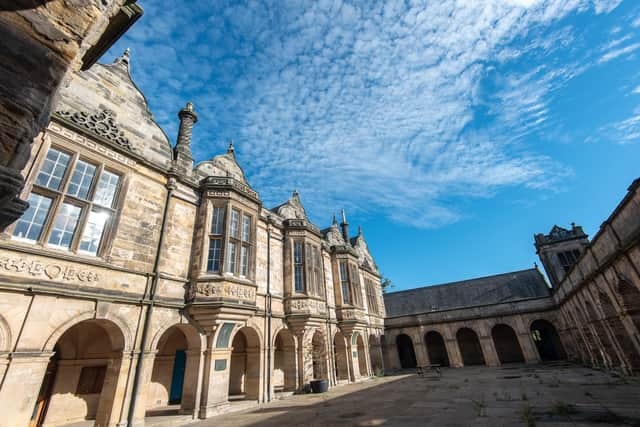

The project shows how historic buildings can be adapted to modern energy standards without compromising heritage value, and can also act as a model for similar projects across the university’s vast estate and the wider St Andrews community.
Professor Ineke de Moortel, sustainability governance lead, said: “This investment marks another major step in our journey towards net zero. It reflects our deep commitment to protecting the historic environment while embracing innovative technologies to cut emissions. We are proud to show how sustainability and conservation can work hand in hand to secure a greener future.”
The project bid was developed between colleagues across estates, sustainability, and development teams, working alongside external partners Buro Happold, WilkinsonEyre, Gleeds, and Currie & Brown.
Ian Rodger, director of public sector decarbonisation at Salix, added: “Universities play a key role in the net zero transition not only by conducting climate research but in decarbonising their own estates and supply chains as well as educating the next generation of our leaders and professionals. We are pleased to work with the University of St Andrews as it makes a significant step to meet its net zero goals.”