
Fife pupils embracing AI technology
A Fife school is leading the way in teaching pupils about AI in an effort to prevent a digital divide.
Pitteuchar East Primary School in Glenrothes has been using CreateAI, a web-based tool that allows pupils to explore artificial intelligence through movement and machine learning.
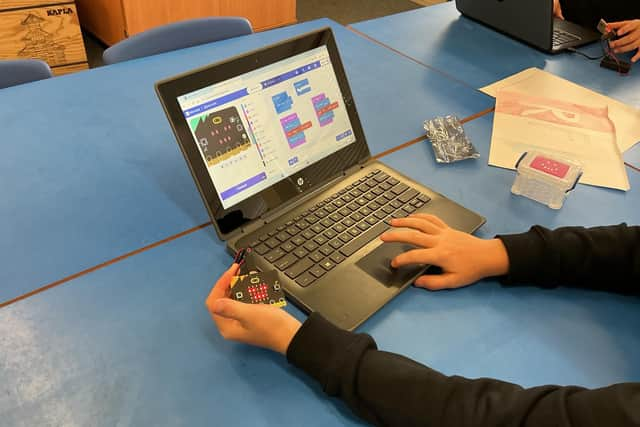

It was created by the not-for-profit Micro:bit Educational Foundation, who are calling for AI to be prioritised alongside core subjects like maths and English.
The foundation says the next digital divide will not just be defined by access to technology but by understanding – separating those who understand how AI works from those who simply consume it.
The CreateAI tool lets pupils train machine-learning models through physical actions like waving or clapping before running them on a BBC micro:bit.
By building these hands-on projects, young people see exactly how AI learns, responds, and makes decisions, showing what is possible when they move from simply using technology to understanding how it works.
Miss Peden, a class teacher at Pitteuchar East, has been using the micro:bit device with her classes since it was first introduced back in 2016.
Last year, her P6/P7 composite class used the micro:bit to create classroom pets, with each pupil coding them and creating characters before looking after them throughout the term.
From a cat in a top hat to a polar bear, the children created cardboard pets and engaged them through the micro:bit.
Miss Peden then used this real life example of caretaking to evolve discussions from what the pets wanted and needed to what the pupils did.
The output from this discussion was used to devise the class charter, which was then coded on the micro:bit and put on display within the classroom.
She said: “It’s vital that we move children away from being solely consumers of technology into being creative contributors.
“We’re now in an age of scrolling, whether it’s social media or YouTube, and it's imperative that young people are given the opportunity to understand technology and begin to create games, devices and apps, rather than just switching on a computer or tablet and passively scrolling.
“When it comes to AI, we’re already seeing its impact in our older primary pupils, who are beginning to explore the likes of ChatGPT and Co-Pilot.
“What has become clear is that they don’t understand the safety implications of using AI and where the data and images they’re sharing go, once they’re uploaded.
“We need to not only make pupils and their parents and carers aware of the risks of AI but also the opportunities available to them through advancing technology.”
Tom Doust, Chief of Learning at the Micro:bit Educational Foundation, added: “Just as we teach children to read and think mathematically, we also need to support them to understand how technologies, like AI, are increasingly shaping their lives.
“This involves building knowledge and confidence to ask good questions and recognise the limitations of AI systems. The Foundation is giving students the opportunity to safely experiment with AI and machine learning, using our CreateAI platform.
“This hands-on and interactive approach helps to demystify AI, helping children understand, question and improve AI systems, making them better placed to shape the technologies, products and services that influence society, while those who do not, risk becoming passive users of systems they neither understand nor control.”
For more information on the Micro:bit Foundation, visit www.microbit.org.