
Fife cocaine ex-addict: ‘I fell through the cracks & my drug addiction took over’
A recovering Fife cocaine addict has called on more to be done to ensure drug users can access vital support to help turn their lives around.
Members of Fife Health and Social Care Integrated Joint Board (IJB) listened to the story of Kennoway man Martin who spoke of how he wanted to die after spiralling into a drug addiction.
Since beginning his road to recovery in 2018, the 42 year-old has been drugs-free for six years and is working hard to help others and give back to his community.
“I came from a loving family, was brought up and raised right. I worked hard from the age of 15. I always had a good job, travelled the world, owned properties, got married, I have a daughter,” he said.
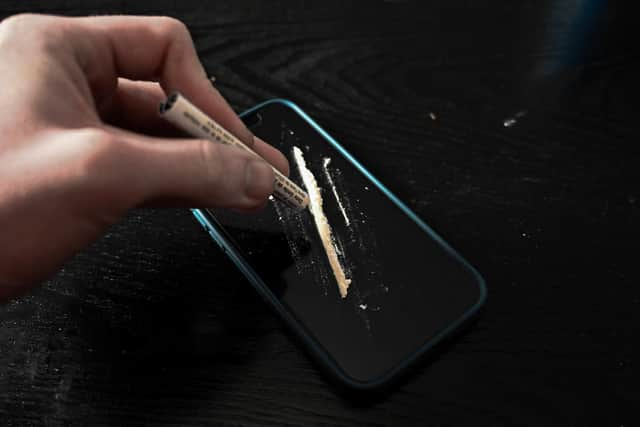

“I always held down a job but recreational drugs were part of my life at the weekend. In my thirties, I went through a messy divorce. My cocaine use became more until I ended up putting a big hole in my nose through cocaine damage.
“At no point did I think I needed to stop. I didn’t realise I was an addict and, at that point, crack cocaine was coming to the streets and that was my next thing and my life was quickly deteriorating.”
After losing his house and his daughter, he became involved in criminal activity which saw him banned from his hometown.
“I was not allowed to go near my daughter because I was very violent,” he continued. “At that point, I didn’t care. I just needed to get my next fix. I was very much alone. I was down to six and a half stone and just wanted to die. I didn’t have the guts to do it and that is the only reason I am still here.”
Enough eventually became enough, and Martin said a friend got him an appointment with someone who could help.
He explained: “I went to the YMCA and I met a lovely guy. He gave me a phone number. That is when I went to my first Cocaine Anonymous meeting. I went into the room and realised I was the biggest looking junkie in that room. That is when the recovery generally started.”
Martin emphasised the importance of signposting to help addicts get the help they need.
“For me, it is all about promotion of recovery especially when it comes to crack cocaine because there is no substitute,” he said.
“There’s lots of recovery out there but if no one points you in the right direction, you don’t know it is there. Most addicts are the same. I never had credit on my phone, never had a TV in the house – I sold it to buy crack.
“If people don’t have people around them that can source the help for them then they will continue to do what they are doing.”
Martin told the board that recovery transformed his life.
“I am able to provide for my family and be there,” he said. “That was all I ever wanted to do was just be a loving, caring dad and partner and I was for a long time until I fell through the cracks and my drug addiction took over,” he added.
“I didn’t know I was an addict until it was too late. I was causing so much damage to the people around me.You don’t see the worr y and the hurt you are putting them through. You think because you are sitting in your flat on your own, you are not hurting anyone but you don’t think about them not sleeping at night.”
Board members heard that work to tackle drug misuse in the Kingdom is continuing with figures revealing that there were four less drug-related deaths in 2024 – a total of 68 – compared to the previous year.
Current challenges include increasing harms linked to cocaine, benzodiazepines and potent synthetic opioids and improving figures in communities such as Cowdenbeath and Leven where a higher volume of drug deaths have been recorded than in other localities.
As well as responding to trends and changes in the drug landscape, focus is being given to improving the quality of treatment and support systems.
Local “one-stop shop” services, known as KY Clubs, now operate across Fife, offering communities access to treatment, mental health support, harm reduction and housing advice on their doorstep.
More people are also accessing residential rehabilitation, and over 200 people each year receive advocacy support to help them navigate services.
Lynne Garvey, Fife Health & Social Care Partnership director, said Martin’s story emphasised the need to hear where things could be done better.
“I am hugely impressed with the work being undertaken,” she added. “Four fewer drug related deaths in Fife, nearly 50 per cent reduction in women’s deaths and 74 per cent reduction in 16 to 24 year olds.
“We are making really good progress - but one death is one too many. We will continue on this improvement journey, continue to look at evidence and target our resources where they need to be.”