
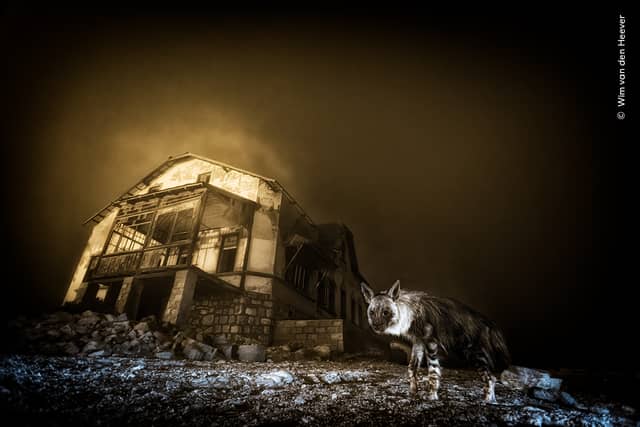


A haunting snap of a rarely-seen hyena passing through a mining ghost town has earned its creator the 2025 ‘Wildlife Photographer of the Year’ title.
The winners of the prestigious competition – which is developed and produced by the Natural History Museum – and each of its diverse categories were unveiled at an awards ceremony in London on Tuesday night (October 14). This year’s grand prize went to South African wildlife photographer Wim van den Heever, for his powerful image ‘Ghost Town Visitor’.
Van den Heever, who also won the ‘urban wildlife’ division, captured the elusive brown hyena – the rarest hyena species in the world – passing through a long-abandoned diamond mining town in Namibia. The photo was taken using camera trap technology, the culmination of a decade of trying.
Jury chair Kathy Moran said that she got a prickly feeling just looking at the image. “You know that you’re in this hyena’s realm. I also love the twist on this interpretation of ‘urban’ – it was once but is no longer a human-dominated environment. Abandoned by miners, wildlife has taken over. Repopulated, if you will. Is it still a town – it would seem that way to me – just no longer ours.”
Other division winners include a stark snap of a longhorn beetle looking out over an abandoned digger; an orphaned giant anteater pup tottering after its caregiver; and a UK photo of an orb weaver spider tucked away in its web on a frosty September morning – the winner of the under-10s category.
All of these entries – and more – will be available to view at the Natural History Museum in London, with the exhibition opening on Friday (October 17), and running until July 12 next year. It will then embark on a UK and international tour, the Museum says, “to inspire millions to appreciate and conserve the natural world”. You can buy tickets to the initial exhibition online here.
Here are a few of the 2025 winners in some of the competition’s key categories, each of which shows off a different facet of the natural world in all of its glory:
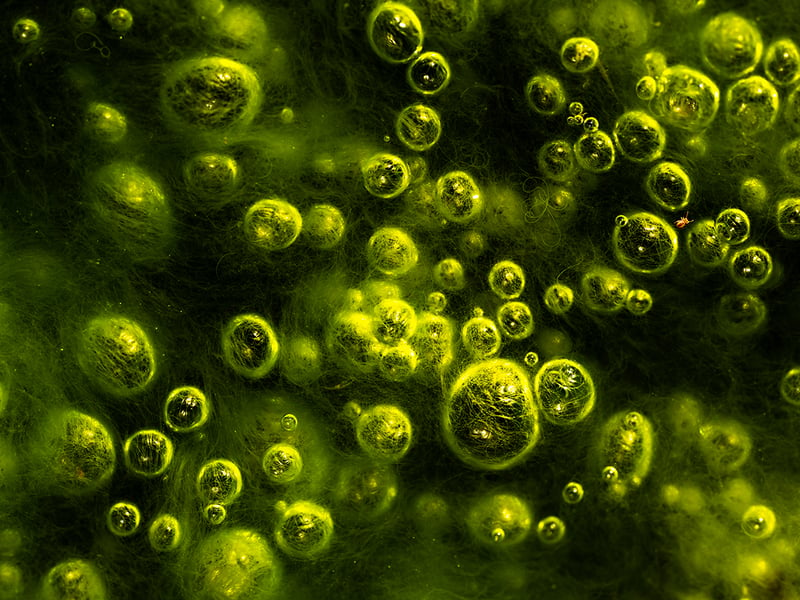
9. Vanishing Pond - Winner, Wetlands: The Bigger Picture
Sebastian visited this fragile wetland ecosystem to highlight its importance as a vast store of carbon dioxide and as a habitat for diverse wildlife. A tiny springtail ran across escaping gas bubbles rising through the algae, giving this image a sense of scale. Austria has lost 90 per cent of its peat bogs, and only 10 per cent of those that remain are in good condition. Platzertal is one of the last intact high moorlands in the Austrian Alps, and an area renowned for its carbon-storing peat bogs. | Sebastian Frölich (Germany)/Wildlife Photographer of the Year
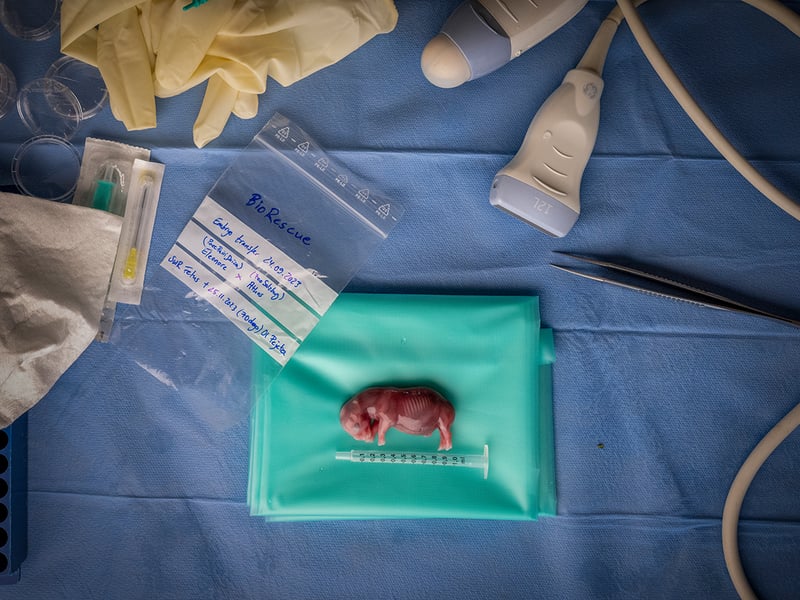
10. How to Save a Species - Winner, Photojournalism
Jon spent years documenting the work of the BioRescue Project, and says that witnessing a milestone in saving a species ‘was something I will never forget’. This southern white rhino foetus, which did not survive due to an infection, was the result of the first successful rhino embryo transfer into a surrogate mother through IVF. This breakthrough paves the way for saving the rare northern white rhino from extinction, as scientists can take the next crucial steps towards transferring the first northern white rhino embryo into a southern white rhino surrogate | Jon A Juárez (Spain)/Wildlife Photographer of the Year
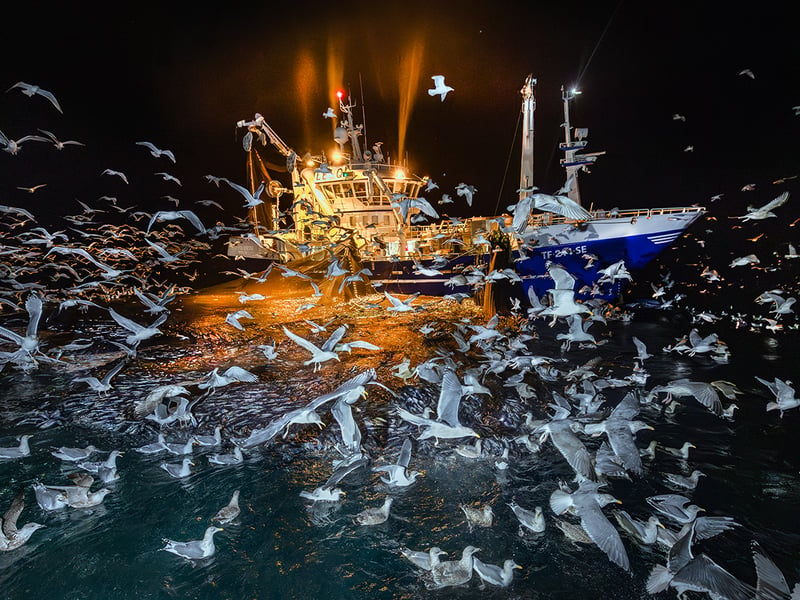
11. The Feast - Winner, Oceans: The Bigger Picture
Audun managed to photograph this chaotic scene of gulls attempting to catch fish trapped by nets. The gulls have learnt to follow the sound of the boats to find a herring feast. Through his work, Audun aims to draw attention to the ongoing conflict between seabirds and the fishing industry. Unfortunately, many birds drown in or around these purse seine nets each year. Various fisheries and researchers are trialling solutions, including sinking the nets more quickly to make them less accessible to the birds. | Audun Rickardsen (Norway)/Wildlife Photographer of the Year
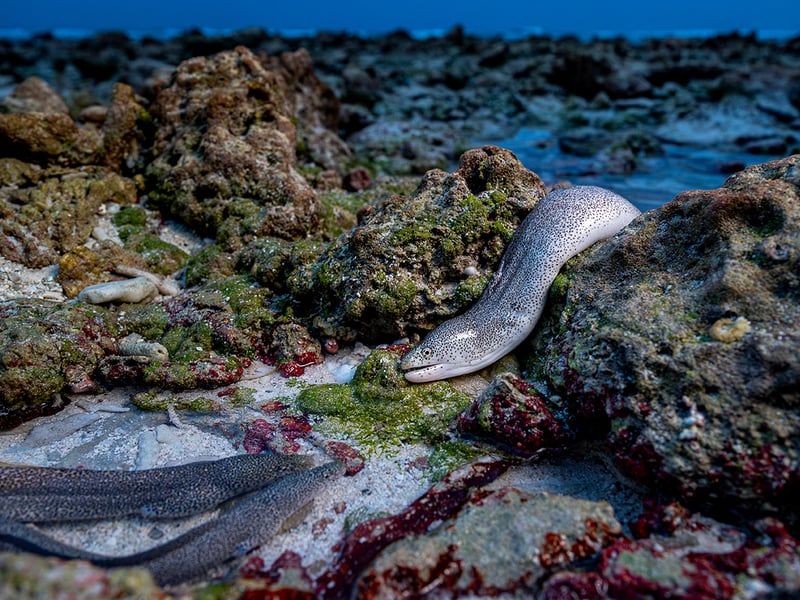
12. Like An Eel Out Of Water - Winner, Animals in their Environment
Shane Gross (Canada) witnesses a peppered moray eel very much in its element hunting for carrion at low tide. It took Shane numerous attempts over several weeks to document this rarely photographed behaviour. At first the eels were elusive, but once Shane realised that they were scavenging for dead fish, he waited. His patience was soon rewarded when these three eels appeared. | Shane Gross (Canada)/Wildlife Photographer of the Year