
Thornton road closure: Network Rail got it so badly wrong and faces task of finding a Plan B

It’s safe to say there haven’t been many issues to match the the anger of a community in recent years.
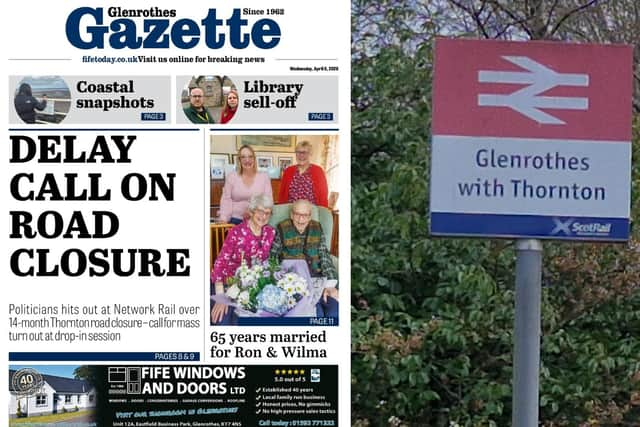
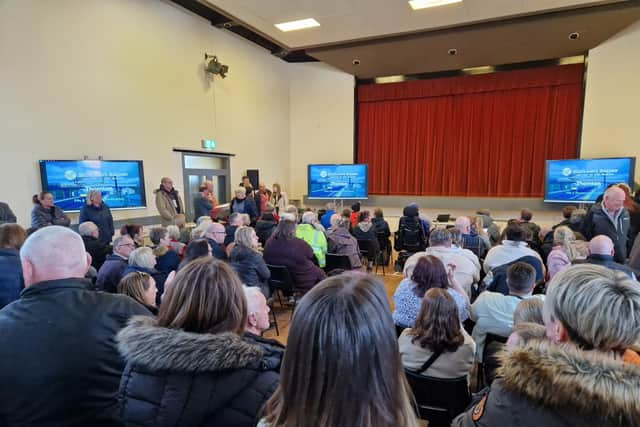
Network Rail staff started putting out chairs half an hour before an anticipated mass drop-in descended on its engagement session at Thornton Town Hall - like many of the trains operating in Fife, it was standing room only by the time it got underway.
At a rough estimate, the room held around 170 people, and they were three and four deep at the back. That is a significant response, one rallied by Thornton Community Council after its own meeting earlier this week resulted in another standing room only attendance.
From the outside looking in, it was bewildering how a national body thought a couple of weeks notice was sufficient to close the only road through the town for 14 months, and how inadequate its consultation has been.

The format may have been deployed elsewhere, but it didn’t work in Thornton - a place steeped in the history of the railway. Sometimes it takes a town where plain speaking is the norm to cut through the powerpoint presentations, and slick corporate language of engagement.
After more than an hour and a half of forensic questioning and sharp criticism, its team certainly got the message. All credit to Martin Gray for standing up and taking every question.
Pausing the project was the only realistic outcome - the moment Fife Council rescinded the traffic order approving the road closure, the timetable fell apart.
Network Rail’s immediate challenge is to come up with other options, and in a very short space of time if it is to get all the pre-work done to avoid any impact on major work scheduled for October. If that date is hit, the costs of this huge infrastructure project are going to soar.
The straight talking from the floor should certainly sharpen the minds of the team at the helm of the project.
The length of time utilities companies need to do their essential work was scoffed at - more than person pointed out they didn’t close the road putting them in, so why five months shut to reroute them? It maybe simplifies the issue, but it is just one of the questions Network Rail, and the utility companies, have to answer.
The impact on businesses was driven home time and again, while the day to day disruption on folk trying to get to a hospital appointment, or school, and the additional costs of daily commutes on the long diverted route were made clear.
Demolishing and rebuilding the bridge will mean some pain - the notion other countries would knock out such a project in a matter of a few weekends is simply not rooted in reality - but faced with direct questions from the floor, it was clear the planning for this major project was miles away from complete.
The onus is on Network Rail to explain what alternatives there are to an “all vehicle” closure, and Fife Council has to come up with a credible justification for shoving all the traffic on to the adjacent dual carriageway. What happens when workers from the farms either side of the road start trundling along in tractors and combine harvesters, and using the roundabouts at Bankhead and Redhouse which are already the busiest in the region? What re-assurances does the community have on how ambulances from Kirkcaldy will tackle the near nine-minute round trip to answer an emergency in Thornton?
And, if this closure was due in mid-May - barely one month away - whey is there no detailed information on the impact on bus services and the alternates to ensure the town continues to be served?
In a nutshell, residents simply wanted to know how the road closure will impact on them, and what steps will now be taken to mitigate that.
They left with an apology and a pledge to do better – much better – while councillors present shook their heads in disbelief at how little they had been kept in the loop until the planning application broke last week. Network Rail has a lot of work to do.