
Fife heart transplant recipient to lead new hospital team at British Transplant Games
A Fife woman who came close to death before receiving a life saving heart transplant is set to lead a new Scottish team at the British Transplant Games later this year.
Alison Gray, who lives near Auchtermuchty with her husband Paul, was close to dying in her early 30s when she was diagnosed with heart failure.

She cheated death again 15 years later when the defibrillator she had lived with for many years – after being told her heart was “like a ticking time bomb ready to go off” – fired several times in a matter of hours during an agonising and life-threatening bout of arrhythmia.
Just days after her defib had repeatedly fired, Alison was told that she had become too ill to receive a heart transplant.
The now 52-year-old said: “I really struggled with that news. I honestly thought I was going to die in hospital.
"I thought ‘I don’t have a chance’.
“Paul was on his way to pick me up from hospital. I went from being told I could leave hospital, to not going home, to going on the transplant waiting list, to not going on the list; all in the space of a few days.
"I was told I was too ill to undergo a transplant. That really was devastating to hear and news that was quite hard to accept.”
As a last resort, medics fitted Alison with a balloon pump to boost the flow of blood through her body. Two days later, after her condition had stabilised, she was deemed well enough to receive a transplant and was added to the waiting list.
"It was all a bit of a blur,” Alison continued.
"I was still trying to process not being able to go home and the types of things you think about when you’re at your lowest.
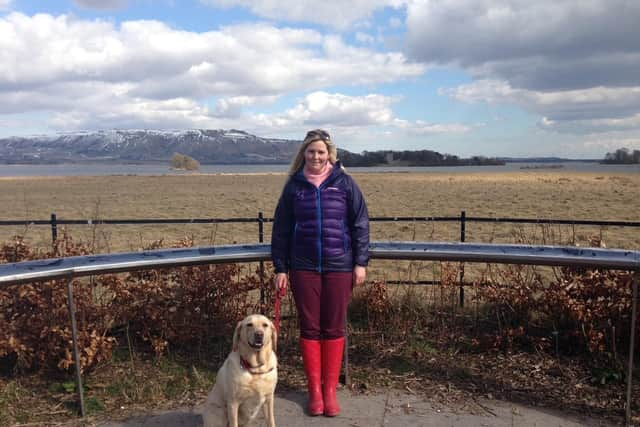
"The things you’ve not done in life, not being able to see my dog again.
"All these things were running through my mind so I wasn’t expecting them to say they were going to put me on the list.”
The very next day – Sunday, February 20, 2022 – medics told Alison they had found a perfect match and she immediately underwent surgery. This was, perhaps, the only chapter of good fortune in her harrowing story, given that the waiting list for organ donation in the UK now stands at a record high of more than 8000 people.
Also miraculous was the speed of Alison’s recovery post-transplant.
She said: “I kept asking the doctors if I’d even had the transplant because I felt so well and was in no pain.”
Within two days she was able to leave her bed and by the time three weeks had elapsed she was convalescing back at home.
“It all felt a bit surreal,” she said, “almost like I’d had a bad dream for a couple of weeks.”
In reality, Alison’s nightmare medical journey extended far beyond the period that led her to receive a new heart.
Her ill health actually began in 2006 when symptoms of fatigue and nausea developed into a chronic lack of appetite and severe weight loss. A keen swimmer and a dedicated business owner who loved her active lifestyle, Alison was suddenly unable to walk any distance. She would struggle to string together coherent sentences and, even more worryingly, found it difficult to catch her breath when sleeping.
She said: “I was 32 at the time and had not long got married to Paul. We’d gone from thinking we were maybe going to start a family to thoughts that I could possibly die. It was all a lot to take in.”
Only when Alison’s hereditary links to heart disease came to light – after doctors became aware that her brother had undergone a heart transplant aged 17 – did the medical approach change and an X-ray was expedited.
Tests showed an enlarged heart and Alison was quickly enrolled onto a course of medication that was accompanied by the fitting of a defibrillator and fortnightly visits to Queen Margaret Hospital, Dunfermline, along with regular check ups at NHS Golden Jubilee Hospital in Clydebank, Scotland’s only heart transplant centre.
After a period of stability, Alison’s health regressed and late in 2008 her defibrillator was upgraded to a dual device with a built-in pacemaker able to regulate her heartbeat, and restart her heart if a major episode ever occurred.
Only once did this happen, in 2016 when the defibrillator fired while Alison was momentarily unconscious, during a period of stability that led her and her consultants to believe there was no longer a serious risk.
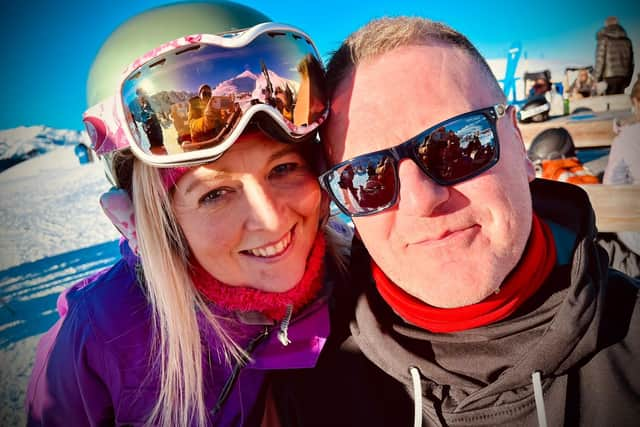
Alison resumed her active lifestyle, returning to the pursuits she loved such as skiing, bowls and golf.
She said: “I really surprised the consultants. They kept checking my records with my date of birth and ID to make sure there hadn’t been a mix up because they didn’t expect me to be able to do things I was able to do. I led a very normal life for quite a long time.”
However, after contracting Covid in 2021, her health spiralled once again, which eventually led to her transplant.
Thankfully, the situation is now very different for Alison who is enjoying a new lease of life with her second heart.
As much as Alison looks forward with boundless positivity, barely a day passes when she does not reflect on her journey and the deep gratitude she feels towards her deceased donor, and their heartbroken family, for supporting organ donation and for saving her life.
Alison is arguably more active than ever before and has participated in several editions of the Westfield Health British Transplant Games, winning medals in a host of different sports.
The games see around 2500 people, including more than 1000 transplant recipients, living donors and their families, participate in a multitude of different sports.
The event is now in its 48th year, and is the flagship event of the Transplant Active campaign that promotes active recovery for transplant recipients and increases awareness of the benefits of organ donation.
At this year’s games, which take place in Sheffield in August, not only is Alison targeting further medal success in golf and crown green bowls, but she’ll be leading a new NHS Golden Jubilee team.
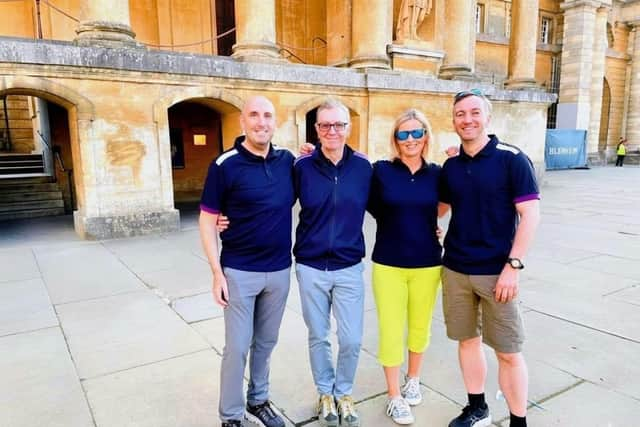
Alison and her three NHS Golden Jubilee teammates – Fraser Wilson, Allan Gilmore and Stephen Hendren – are all heart transplant recipients. It’s an exclusive club, but one Alison and the team are keen to expand in due course.
Alison said: “We’re going to start as a small team, but in time we’d like to grow.
“The games are truly unique, not just for recipients, but also donors, their families and anyone else impacted by organ donation. Because you’re all part of one community you’re even supporting you’re rivals.
“That’s not something you would usually do in sport, but we’re not a normal set up. We’re all there celebrating organ donation and, for so many, a second chance of life. It’s such a special community we’re involved in.
“It’s not about winning medals and being super competitive. It’s about being there and supporting each other, enjoying each other’s company and showing what fun we can have – and how active we can be - with our second chance of life.”
For more information about the 2026 Westfield Health British Transplant Games visit www.transplantactive.co.uk
For more details about organ donation, visit www.organdonation.nhs.uk/register-your-decision/donate/