
NHS Fife finances: £1.7m behind savings targets, board members warned
NHS Fife is £1.7 million behind its savings targets, and three out of 13 of its savings schemes are in danger of falling short by March 2025, board members have been told.
At the beginning of this year, the Scottish Government the region's health authority to find £25 million – or 3% – of savings across the its budget. Since then, the board has been trying to make progress on those promises.
So far, it is on track to make £23 million worth of those savings. However, three of the 13 cost reduction schemes are at “significant risk”.
“Delivery of the savings framework is critical to the sustainability and strategic development of NHS Fife, particularly in meeting the current fiscal challenges,” the report from Ben Hannan, Director of Reform and Transformation, said. “At this time, five savings schemes have significant assurance, five have moderate assurance, and three have limited assurance.”
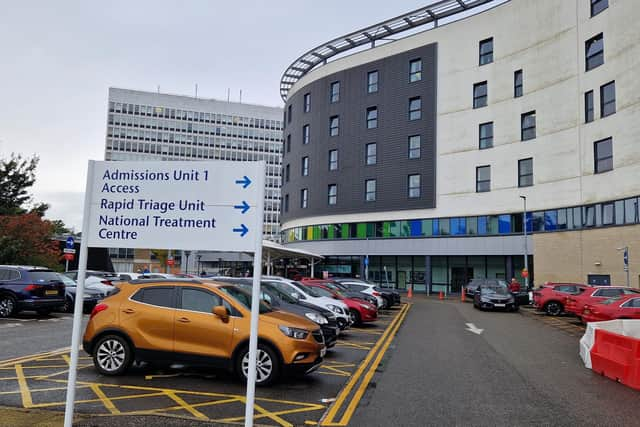

The £25m savings plans announced earlier this year included immediate changes across the organisation, including continued medicines optimisation, which means effective purchasing, prescribing, supply, administration, and waste reduction; a major private finance initiative contract review for phase three developments at Kirkcaldy’s Victoria hospital; re-incorporating aspects of Fife’s unscheduled care bundle - previously managed by the Health and Social Care Partnership - back into NHS Fife’s Acute Services Division for efficiency and effectiveness; reducing Covid-19 legacy costs; and rationalization of its estate and infrastructure.
Board papers revealed that Haig House, Hayfield House and Cameron House are now closed, and the organisation is looking at additional opportunities around Cameron and Stratheden sites.
However, there are three schemes at “significant risk” of falling short.
“Of greatest impact is the challenge in releasing savings from supplementary staffing,” Mr Hannan’s report said. “The spend on agency and bank continues to reduce but is not quite near the planned saving. Work is underway to identify further opportunities in this area.”
According to Mr Hannan, NHS Fife has been forced to continue using agency staff within certain areas due to a national skill shortage. This reliance on supplementary staff is expensive, and it has proved difficult for NHS Fife to make savings in this area.
Surge capacity, which is the NHS' ability to respond to a sudden increase in patient care demands, is another area at “significant risk”.
There were plans to cut costs and reduce surge capacity, but Mr Hannan said the plans have been impacted by “high continuing levels of emergency admissions”.
“Acute services [are] operating at pressures higher than the preceding two winters,” his report explained.
“Plans are progressing around improved system flow and discharge planning, supporting Fife’s National below average length of stay.”
The health board also intended to make £1.4 million worth of savings through “business transformation”. This would have capitalised on digital opportunities and seen certain admin functions automated and reimagined. However, these plans have faced delays “due to the complexity of planning required to date and time needed to agree approval on principles”.
Complicated service level agreements and external contracts with other health boards and organisations have also proved complex and difficult to deliver in full.
“Whilst there has been significant progress across individual schemes and the [savings] programme, there are a number of areas which require accelerated progress,” Mr Hannan’s report said.
“A priority focus will be to review the moderate and limited assurance schemes to identify opportunities to accelerate performance for the remainder of the year.”