
Remembrance Day: poignant letters from the front line convey horror of WW1

Every week for five years, the Fife Free Press carried a roll of honour which captured the full horror of war.
The pages recorded the losses, and the incredible bravery, of local folk who had signed up and, in so many cases, made the ultimate sacrifice in the Great War - World War One. Many of their names are etched on the war memorial at Kirkcaldy Galleries.
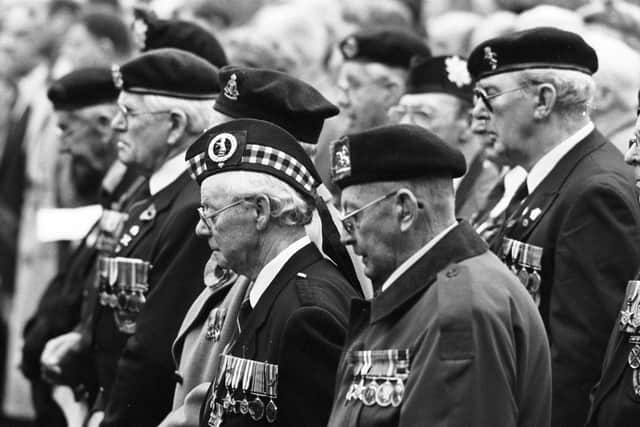

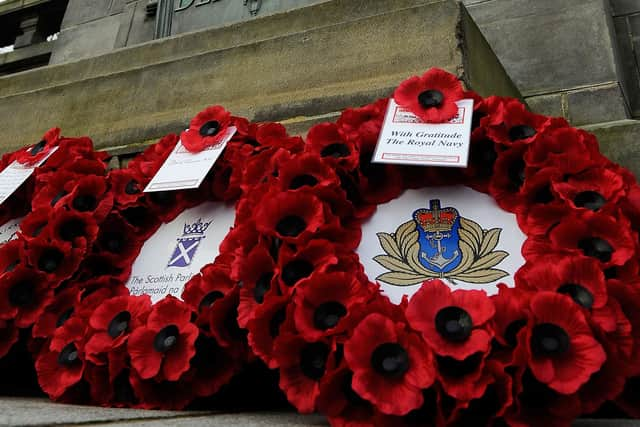
They are remembered on Armistice Sunday, and again today as we fall silent at 11:00am on the 11th to honour those who died in all the conflicts which have followed; grievous losses which span the generations and touch families to this day.
It is an act of remembrance that spans the decades and generations. A glance at our dusty volumes from 1918 bring the horrors of war vividly to life.
The roll of honour included a report of the death of Captain James Elder. A year earlier he had his vessel sunk by a German sub and he was wounded with shrapnel.
He got command of another large vessel and, on March 7, his steamer was also sunk by a sub. News of his death revealed he was knighted by the King of Italy for his gallantry and presented with the highest order of Cavalerie of the Crown of Italy.
And then there was Private William McGregor, who died in a casualty clearing site in France.
He was called into a place of danger and went fearlessly. He was hit on the back and side, and died in hospital. Exceptional circumstances saw his leave home cancelled. He was killed on the very day he should have arrived in Kirkcaldy to be with his family
January 1918 and the Press reports that on the Friday, the last of Lance Sergeant Richard Oliver’s letters arrived home – “his usual cheery self.” On the Sunday, his mother received news of his death in Palestine. He was 26 years old.
May 1918. Curtains drawn in more households and mourning clothes donned as news of further losses reach the town. Sergeant Andrew Watson, killed in action, aged 19; Pvt Wm Lawson, dead at 20; Pvt David Dickman; Pvt William Goodman; Sergeant, John Adamson Black Watch; Private James Cadger, Black Watch, and Pvt James McKay, KOSB taken by shellfire.
Just a few of the hundreds of names preserved for posterity in the columns of the Press. The final mention in dispatches.
On the passing of Private McKay, his commanding officer wrote: “He was a good lad, and was liked by his comrades for his quiet, manner. He was a good soldier.’’ He was also just 19.
For the Nicol family in Institution Street there were two telegrams – one to say son William was dangerously ill, the second to say he didn’t make it. Barely 18, he passed away at No 1 British General Hospital, Hamadan. He had seen service in Malta and Mesopotamia and he never had a furlough – a leave of absence – since enlisting. The Steel family of Roseberry Terrace, saw one son killed, one taken prisoner.
But amid the carnage, the horrendous loss of life, and injuries, from which many never fully recovered, there were still shards of light, summed up by one final story.
Corporal James McDade was taken prisoner in 1914. After three and half years in captivity, he wrote to his mother, Mrs Mary McDade of West March Street, with the news she longed to hear – he was on the road home, and had been taken to an internment camp in Holland.
The joy, and relief, poured from the page. “It was like coming out of hell into heaven,” he wrote. “Let all my friends know I am in the pink!”
This morning, as we stand in silence, we shall remember them all.