
Unique take-over day turns cutting edge St Andrews University research into music

A one-of-a-kind musical takeover day that transforms cutting-edge University of St Andrews research into original music will take place in Dundee next week.
As part of a collaboration between PhD students and the Royal Conservatoire of Scotland, the Intersections concert will showcase newly composed works inspired by the environment and exhibits of Dundee Science Centre.
Traditionally held at the University of St Andrews, the free, drop-in event will take place at Dundee Science Centre for the first time, at 3.30pm on Wednesday, May 6. Prior to the one-hour performance, the composers and researchers will introduce their topic. The rehearsal, starting at 10:00am, is also open to the public.
The programme, which has been running for many years, pairs composers with PhD researchers who apply to participate from across a range of disciplines. Together, they create original pieces for performers playing a range of instruments, including the flute, bass clarinet, trumpet, horn, violin and cello.
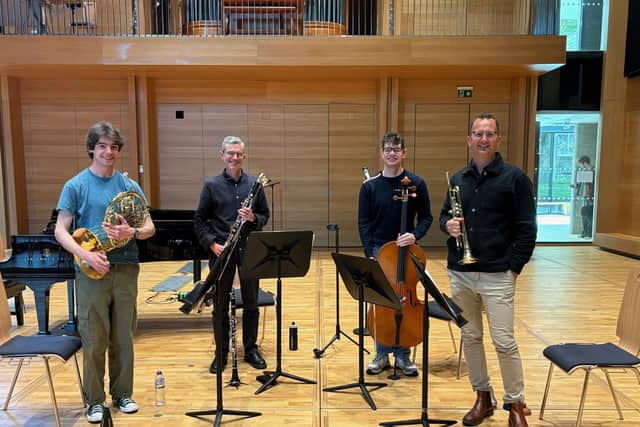

This year, each composition responds to the students’ specific research topic and relevance to the environment and exhibits of Dundee Science Centre itself. Featured themes include bat communication, the trustworthiness of AI, black holes, AI in game development and dance and film. The result is an hour-long programme of short, varied pieces, each offering a unique interpretation of complex ideas through sound.
Jill Farrell, chief executive of Dundee Science Centre, said, “This concert, a real crossover of science and the arts, is a fantastic example of that, building on a steady stream of collaborations with the University of St Andrews. I’d encourage anyone with an interest in science or music, especially new audiences, to come along, enjoy this free concert, and explore a new perspective on some amazing scientific topics from local researchers.”
Over recent years, students from nearly every school at the University of St Andrews have taken part in Intersections, demonstrating the breadth and creativity of interdisciplinary collaboration. Dr Bede Williams, deputy director of music and senior lecturer in music, explained, “We live in a world where communication is key to connection. That process of sitting down with someone from a different discipline and exchanging ideas is essentially science communication, and that’s what we’re doing here.
“Seeing what someone from a different discipline makes sense of what you do is an amazing process, while also reflecting wider themes within research that will ultimately lead to a better society. “