
How 1946 bread rationing led police to a heated ‘housewives meeting’ in Kirkcaldy

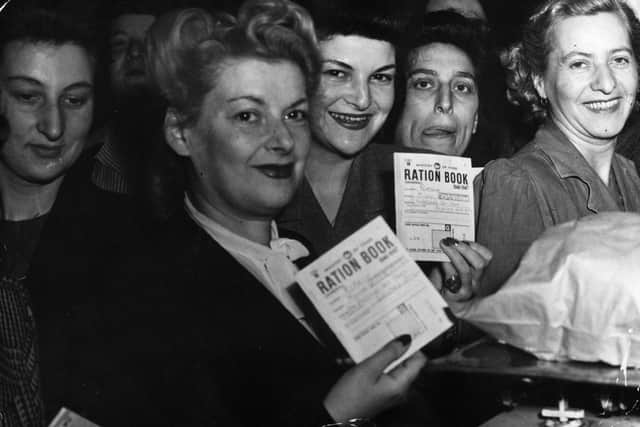
Eighty years ago this week, housewives in Kirkcaldy raised their voices in protest against bread rationing - an issue so contentious that police were called to a public meeting, and some members of the public ejected.
It was July 1946, just months after the end of World War Two, and a new Labour Government incurred the wrath of many ordinary folk as it took steps to tackle severe global wheat shortages.
Bread had never been rationed before, and the new rules, limiting ordinary adults to nine ounces per day, sparked a huge backlash.
In Kirkcaldy, a “housewives protest meeting” saw between 400 and 500 people pack the Adam Smith Halls - now the Adam Smith Theatre - which, after the liveliest of debates, agreed, by a large majority, to petition the Government to halt its proposal.

“Non political questions”were invited from the floor, and Mrs Neish, who presided, brooked no dissent.
When a Mrs Dand - who described her as a working class woman who did not like rationing - suggested that housewives should be trying to make thew new rulesa work, there was uproar.
Mrs Neish and Mrs Dand engaged in a five-minute shouting match which resulted in the latter being escorted out of the hall by police officers who’d turned up a few minutes earlier. Various people were on their feet, and, from the gallery, one could be heard shouting “you’re a fascist!”
Mrs Dand maintained the Government would not take such a step unless it was absolutely necessary, and blamed the Tory press for the anti-bread rationing hysteria.
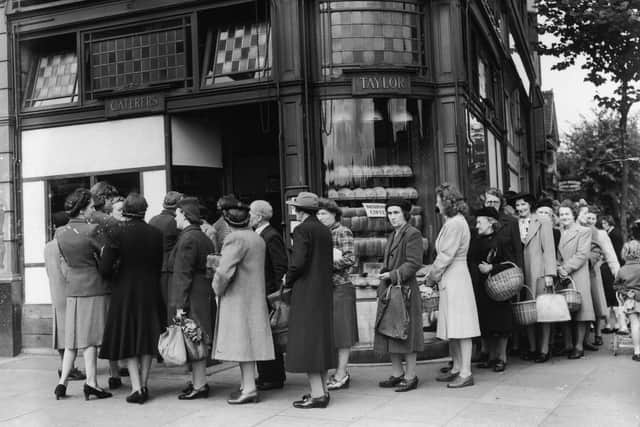
The meeting was also addressed by Tom Hubbard, MP for Kirkcaldy Burghs, who supported rationing and said he’d witnessed queues at every baker’s shop in Kirkcaldy for the very first time.
The Fife Free Press reported: “He had never seen people queue for sugar or tea - and all the queue accomplished was that the shopkeeper got rid of his commodities in two hours instead of a whole day.
“The poor devils who had no time to queue, the women with bunches of kiddies to look after the old age pensioners had to go without. Those people who were squealing so much on the other side he had never seen standing in a queue. They simply had to pick up the telephone. That did not happen to common people.”
Mr Hubbard said: “Is there anyone here who would say the right course is to have a scramble if there is a shortage? If an item was in short supply, it was not merely having the money to pay for it but the time to queue for it. Those people who have the greatest amount of both can have what is available, and the rest can do without.”
Outside the halls, members of the Communist Party distributed leaflets asking for support of rationing - they also made several attempts to move an amendment during the meeting, only to be told by Mrs Neish they didn’t have a vote. This was for housewives, and, in a packed hall there were just a “sprinkling” of men.
Despite the turnout, Mrs Neish said was disappointed more housewives had not attended, but accepted they would have been exhausted after the three-day struggle they’d endured as a result of bread rationing.
She herself had gone out at 7:00am for milk, but the queue was so long she had not waited. The time had come when they must have a change in the system whereby housewives would have an easier time, she said.
The Press reported: “During the war they accepted the trials of rationing because that had been their contribution to winning the war. Now that was over, there ought to be an improvement, Instead it was getting worse and it was entirely a non political problem - it was a housewives’ problem.” Mrs Neish stressed the needs of the adolescent child- how could mothers have their sons fit enough to go into the army if they did not have good food to give them?
It was this question which made her so furious about bread rationing
She criticised MPs who she said lived off the fat of the land in London for five days a week and, then, when they came home, had their full rations while ordinary people had to make them.
The meeting was also addressed Mr Mr G.C.M. Harwell, a master baker from Edinburgh, who wanted to give a visual demonstration of the quantity each section of the community would get under the new Bread Rationing Order.
He pointed out that “in the long history of Britain, never before has bread been rationed, not even during the darkest hours of U-boat sinkings” and the lack of wheat was down to the “gross mismanagement and lack of foresight” of the Government.
Rationing which came into effect just days before the meeting had left housewives confused over what they were entitled to, and when officials in Edinburgh decided to sell bread without coupons, he took in more money in the last 45 minutes of trading than he had done all day.
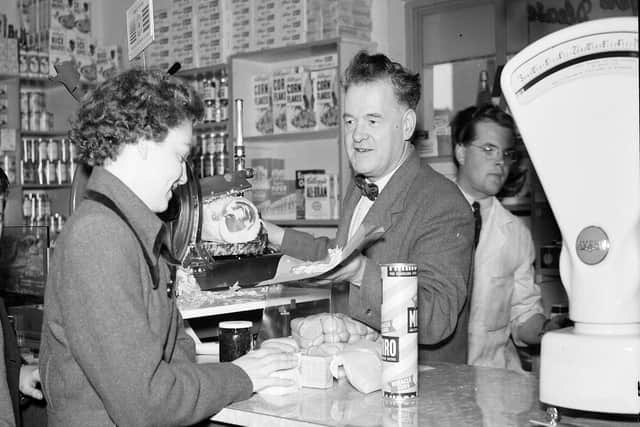
And that visual demonstration more than made its point as he held up pieces of bread to show what rationing would look like under the scheme.
It prompted the comment: “My man has as much as that in his piece box!”
But, the Government pressed ahead with its plans and bread was to be rationed for the next two years.